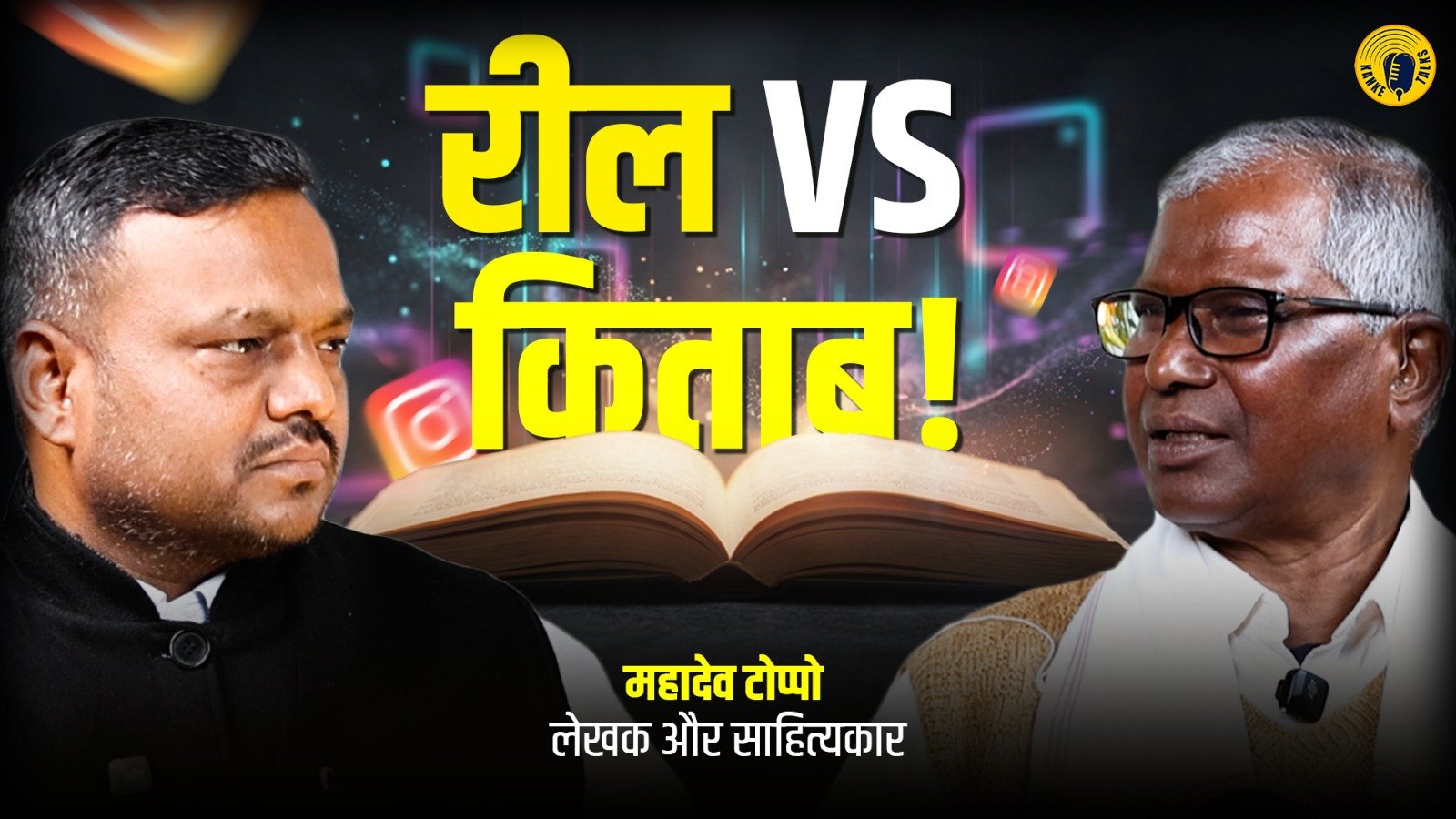
Kanke, Jharkhand: In a time dominated by social media reels and artificial intelligence, questions are being raised about the relevance of literature. Is literature losing its place in modern society? To explore this, KankeTalks spoke with Adivasi writer and thinker Mahadeo Toppo, who shared insights on indigenous literature, forests, identity, and the role of storytelling in contemporary India.
Q: Many people believe literature is fading in the digital age. Do you think literature is still alive?
Ans: Yes, literature is very much alive. It may not appear in the same form as before, but the human need to express pain, joy, identity, and resistance never disappears. Literature changes its medium, but its essence remains. As long as humans have questions and emotions, literature will survive.
Q: Literature is often called the mirror of society. Do you think Indian literature has reflected Adivasi society fairly?
Ans: Not really. For a long time, Adivasi communities were missing from mainstream literature or were portrayed through stereotypes. Literature reflected dominant society, not marginalized voices. That is why Adivasi literature became important—to present our own image, in our own words.
Q: How did Adivasi literature emerge as a written tradition when indigenous cultures were mostly oral?
Ans: Adivasi literature existed in songs, folklore, and rituals long before books. The written tradition came later with education and political movements. Writers like Mahasweta Devi and others helped bring tribal struggles into national consciousness. Later, Adivasi writers themselves began writing poetry, history, and philosophy in their own languages and Hindi.
Q: Forests are often seen as symbols of backwardness. How do you view forests in the modern world?
Ans: Forests are not backward. They are the foundation of life. Rivers, oxygen, medicines, biodiversity—all come from forests. Indigenous communities have lived in harmony with nature for centuries. Today, when the world faces climate change, our way of life looks more scientific than primitive.
Q: Young people today prefer reels and videos. Why should they still read writers like Premchand or Tagore?
Ans: Reels give instant emotion, but literature gives deep understanding. A video shows you a picture, but a book makes you imagine. Reading builds empathy, critical thinking, and patience. Writers like Premchand and Tagore explored social injustice and human emotions in ways that are still relevant today.
Q: Is literature an elite activity in India?
Ans: In India, reading has often been seen as a luxury. Communities that had access to education developed strong literary cultures. Adivasi society was denied that access for a long time. But now, new generations are writing their stories. Literature is becoming a tool of empowerment, not elitism.
Q: You have said that Adivasis are spiritual rather than religious. What do you mean by that?
Ans: Our beliefs are rooted in nature and community life, not rigid institutions. We respect rivers, trees, animals, and the land. It is a spiritual relationship, not hierarchical religion. This worldview teaches coexistence, not domination.
Q: How important is literature in addressing social discrimination?
Ans: Literature gives voice to pain and injustice. When you read someone’s story, you cannot ignore their humanity. Writing can transform anger into dialogue. It prevents violence by creating understanding. For marginalized communities, literature is resistance.
Q: Has writing personally helped you deal with discrimination?
Ans: Yes. I have faced humiliation simply for being Adivasi. Writing helped me express that pain constructively. If I had not chosen words, I might have chosen anger. Literature is healing.
Q: Does technology threaten literature?
Ans: Technology changes how we read, but it does not destroy literature. Podcasts, blogs, and digital platforms can spread serious ideas. The real danger is not technology—it is losing the habit of deep thinking.
Q: What role does Adivasi literature play in modern India?
Ans: Adivasi literature reminds India that development must be balanced with nature, identity, and dignity. It offers alternative ways of living and thinking. It is not just a regional literature; it is part of India’s core narrative.
Q: Finally, what message would you give to young readers?
Ans: Read slowly. Read deeply. Literature teaches you to see others as humans. In a fast world, reading is an act of resistance and reflection.
To explore in depth the questions surrounding literature in the digital age, the evolution of Adivasi writing, the meaning of forests in modern India, and the powerful personal reflections of Mahadeo Toppo, be sure to watch the full episode on the KankeTalks Hindi Podcast.