
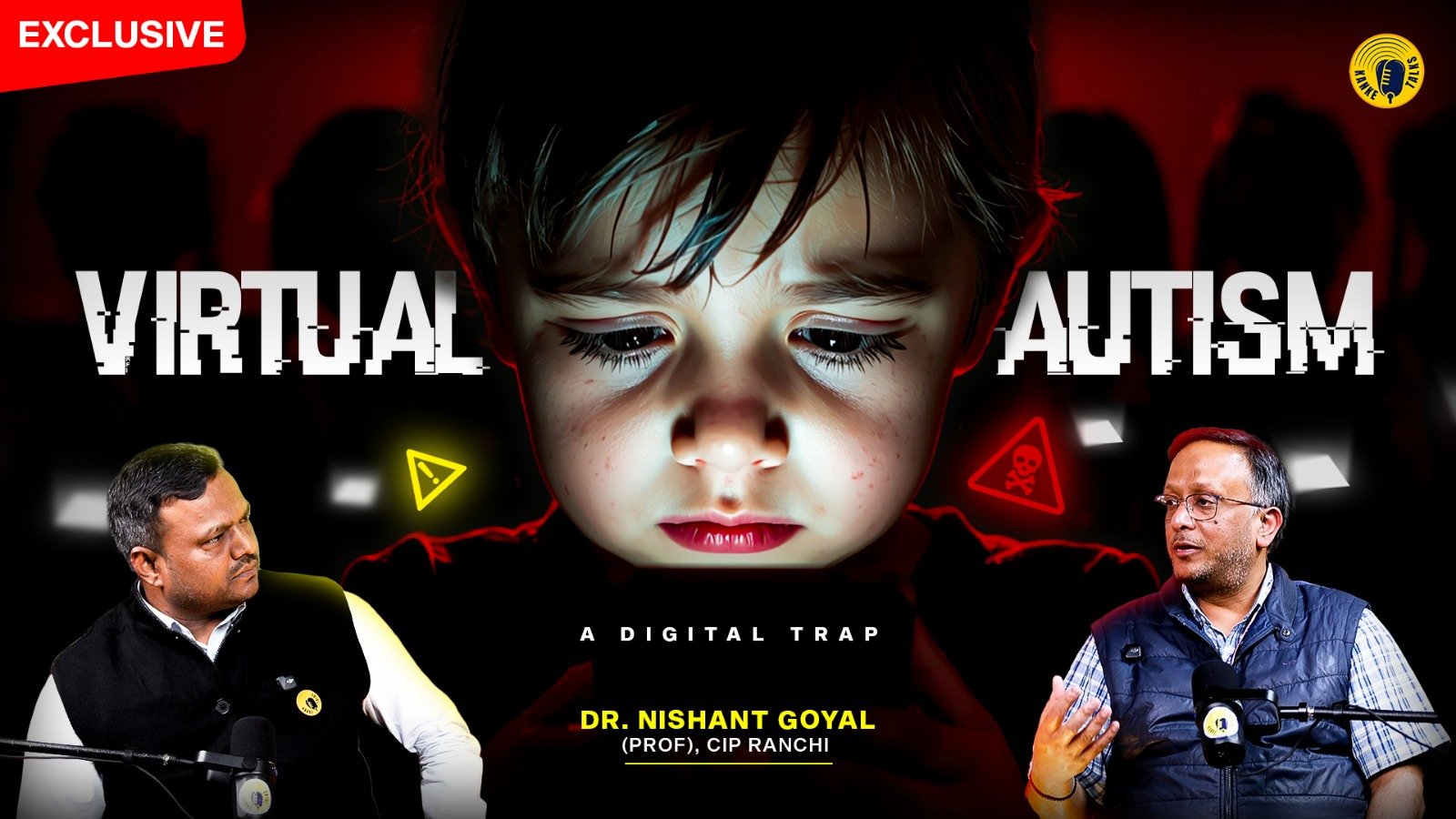
Kanke, Jharkhand: With smartphones becoming ubiquitous in Indian households, concerns are rising about their impact on children’s mental and cognitive development. In a conversation with Kanke Talks, psychiatrist Dr Nishant Goyal from the Central Institute of Psychiatry (CIP), Ranchi, explains the concept of “virtual autism”, its warning signs, and what parents must do to protect their children.
Q: The term ‘virtual autism’ is trending widely. What does it actually mean?
Ans: The term “virtual autism” is not a clinical diagnosis. Autism is a neurodevelopmental disorder with genetic and biological factors. What people are calling virtual autism refers to developmental delays in children due to excessive screen exposure during early childhood. When children spend more time with screens than with humans, their brain development trajectory can be affected.
Q: Why is early childhood considered so critical for brain development?
Ans: From birth to around two years of age, the human brain undergoes the fastest development. During this period, children learn language, emotional expression, and social skills through human interaction. If screens dominate this phase, we are essentially filling their brains with artificial stimuli instead of real-life experiences, which can hamper natural development.
Q: What are the early warning signs parents should watch out for?
Ans: Parents should be concerned if a child is not forming two-word sentences by around one and a half years. Normally, children start making sounds, then single words like “mama” or “papa,” and gradually form sentences. If this process is delayed, it is a red flag. Additionally, lack of eye contact, poor response to name calls, and limited social interaction are warning signs.
Q: Can excessive screen time mimic autism-like symptoms?
Ans: Yes, excessive screen exposure can produce autism-like symptoms, such as delayed speech and poor social interaction. But that does not mean the child has autism. These are developmental delays caused by environmental factors, and in many cases, they are reversible if intervention happens early.
Q: How much screen time is considered harmful for children?
Ans: Excessive screen usage is harmful at any age, but especially in young children. Screen time often replaces human conversation, which is essential for emotional and social growth. The problem is not just the screen, but what the screen replaces—interaction, conversation, and bonding time.
Q: Many parents use mobile phones to feed or calm children. How dangerous is this habit?
Ans: This is a very concerning trend. When children associate eating, sleeping, or calming down with screens, they become dependent on digital stimulation. They stop learning self-regulation and emotional coping skills. Parents must realize that convenience today can lead to serious developmental issues tomorrow.
Q: Does screen addiction affect children’s mental health?
Ans: Absolutely. Excessive screen use can lead to loneliness, frustration, reduced attention span, and emotional problems. Despite having many online friends, children often feel socially isolated. Loneliness can increase frustration tolerance issues and emotional instability.
Q: Can excessive digital exposure influence decision-making in children and teenagers?
Ans: Yes, digital exposure can affect impulse control and decision-making. When children spend most of their time in a virtual world, they may struggle to analyze consequences in real life. Impulsive decisions, including risky behaviors, can be influenced by online content and lack of real-world guidance.
Q: Some extreme cases of screen addiction have been linked to self-harm. How serious is this issue?
Ans: I do not want to alarm people, but the consequences can be severe. Excessive screen exposure can lead to social isolation, neglect of self-care, and in worst cases, suicidal behavior. As clinicians, we often discuss these issues only after tragedies occur, which is unfortunate. Awareness and prevention are crucial.
Q: Apart from screens, what other factors influence a child’s mental health?
Ans: Family environment plays a major role. Troubled families, parental conflict, early deprivation, and lack of emotional security are significant risk factors for mental health issues in children. Emotional security is essential for healthy development.
Q: What should parents do if they suspect developmental delays in their child?
Ans: Parents should not ignore early signs. Early intervention is the key. Consult a pediatrician or child psychiatrist if developmental milestones are not being met. Timely therapy and parental involvement can significantly improve outcomes.
Q: How can families reduce the negative impact of screens?
Ans: Parents should regulate screen time and ensure parental supervision. Creating screen-free hours or days at home is a good practice. Families should eat at least one meal together without screens. Real-life interactions must be encouraged through play, conversation, and shared activities.
Q: Do screens have any positive role in children’s development?
Ans: Technology has benefits, especially for learning and communication. The key is balance. Parents must focus on positive content and limit harmful exposure. Awareness of risks is important so that screens do not dominate children’s lives.
Q: Finally, what is your message to parents and society?
Ans: Children are not responsible for screen addiction; adults are. Parents and caregivers must take responsibility for children’s digital habits. Human connection, emotional bonding, and real-world interaction are irreplaceable. Virtual autism is not a disease—it is a wake-up call for society to rethink digital parenting.
To understand the growing concerns around screen addiction, the science behind “virtual autism,” the critical stages of early brain development, and the expert insights of Dr Nishant Goyal, don’t miss the full exclusive conversation on the KankeTalks Hindi Podcast.