From defining Dharma to addressing crime, education, and the role of spirituality in governance, the seer speaks on questions that resonate deeply with today’s youth.
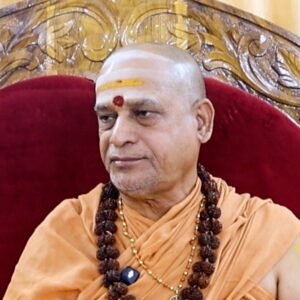
In a time when questions around identity, religion, and morality are increasingly debated, Jagadguru Shankaracharya of Dwarka Sharada Peeth offers a perspective rooted in Sanatan philosophy.
In an exclusive conversation with KankeTalks, he addresses fundamental questions — What is Dharma? Can religion be changed? Why does injustice exist? — while also speaking candidly on youth, education, politics, and the future of Indian civilisation.
Q. What is Dharma in simple terms?
Dharma is not limited to rituals. Feeding the hungry, serving the needy, protecting culture, and following tradition — all of this is Dharma. It elevates a human being above animal instincts and gives a universal perspective to life.
Q. Is Dharma created by humans?
No. Dharma is eternal. Anything created by humans will eventually be destroyed. Dharma existed before us and will continue after us.
Q. What drew you towards spirituality in your youth?
Initially, I was drawn towards Sanskrit and knowledge. But after meeting my Guru, that pursuit transformed into renunciation and spiritual awakening. This journey, I believe, is guided by past karmas and blessings.
Q. Did you face challenges when choosing this path?
Yes, but with determination and divine grace, challenges are overcome. True renunciation is not external — it must happen within the mind.
Q. Why do people fall into adharma?
The root cause is uncontrolled desires. When desires dominate, a person abandons Dharma and accepts adharma, which leads to downfall.
Q. Why do people have different outcomes despite similar education?
This is due to past karmas. Not everyone reaches the same position despite having similar opportunities because life outcomes are influenced by previous deeds.
Q. Does Dharma unite or divide people?
Dharma unites. People misunderstand it. True unity comes when people share a common purpose — compassion, service, and adherence to values.
Q. Can religion be changed?
No. One may believe they have changed religion, but Dharma cannot be changed. It is inherited through lineage and tradition, just like one cannot change their parents.
Q. Should we give charity? How and when?
Charity must be given to the deserving. Compassion, however, should be extended to everyone — regardless of religion or status. Helping someone in distress is Dharma.
Q. Why does injustice exist if God is powerful?
The root cause is ignorance and lack of Dharma in education. Children are not taught values early, and as a result, society faces moral decline.
Q. Is modern education missing something?
Yes. Education today lacks Dharma. Just like other subjects are taught, Dharma should also be included to build character from childhood.
Q. Is there a decline in Indian culture and values?
Those who abandon tradition lose protection. The solution is to return to our roots, follow scriptures, and respect our cultural lineage.
Q. Is there a global conspiracy against Indian culture?
There is no doubt such forces exist. Unfortunately, even politics is influenced by them. Governance must be guided by Dharma for true progress.
Q. Should politics be guided by religion?
Dharma ensures ethical governance. When leaders follow Dharma, society naturally becomes righteous.
Q. Can a Dharmacharya challenge a ruler?
Yes, and it is necessary. If a Dharmacharya does not guide or challenge the ruler, who will? Leaders must be guided towards the right path.
Q. How can one identify a true spiritual leader?
By observation and experience. Truth reflects through actions, simplicity, and positive influence.
Q. Does spirituality make a person selfish?
No. Spirituality teaches detachment but not indifference. One must still help others — becoming a medium to relieve suffering.
Q. What is your message for today’s youth?
Youth must balance modern progress with traditional values. True peace can only be achieved through spirituality.
Q. What is the greatest strength of Sanatan Dharma?
Spirituality. It connects individuals with their inner consciousness.
Q. And the biggest challenge?
Ensuring that the youth not only follow Dharma in numbers but also in quality — with understanding and conviction.
Q. Can India’s future change through spiritual awakening?
Yes. Our ancestors have proven it. If we reconnect with our roots, India can rise as a global guide once again
Q. How should youth practice spirituality in busy lives?
Through consistent practice. Even small efforts, done regularly, lead to transformation over time.
Q. What is the significance of Ekadashi, Purnima, and Amavasya?
These observances benefit both health and spirituality. Following them as per scriptures leads to personal and collective well-being.
The conversation underscores a recurring theme — that Dharma is not merely a religious construct but a guiding framework for life, governance, and society.
In an era of rapid change, the Shankaracharya’s message remains clear:
Progress must not come at the cost of roots.